 AAVARÉ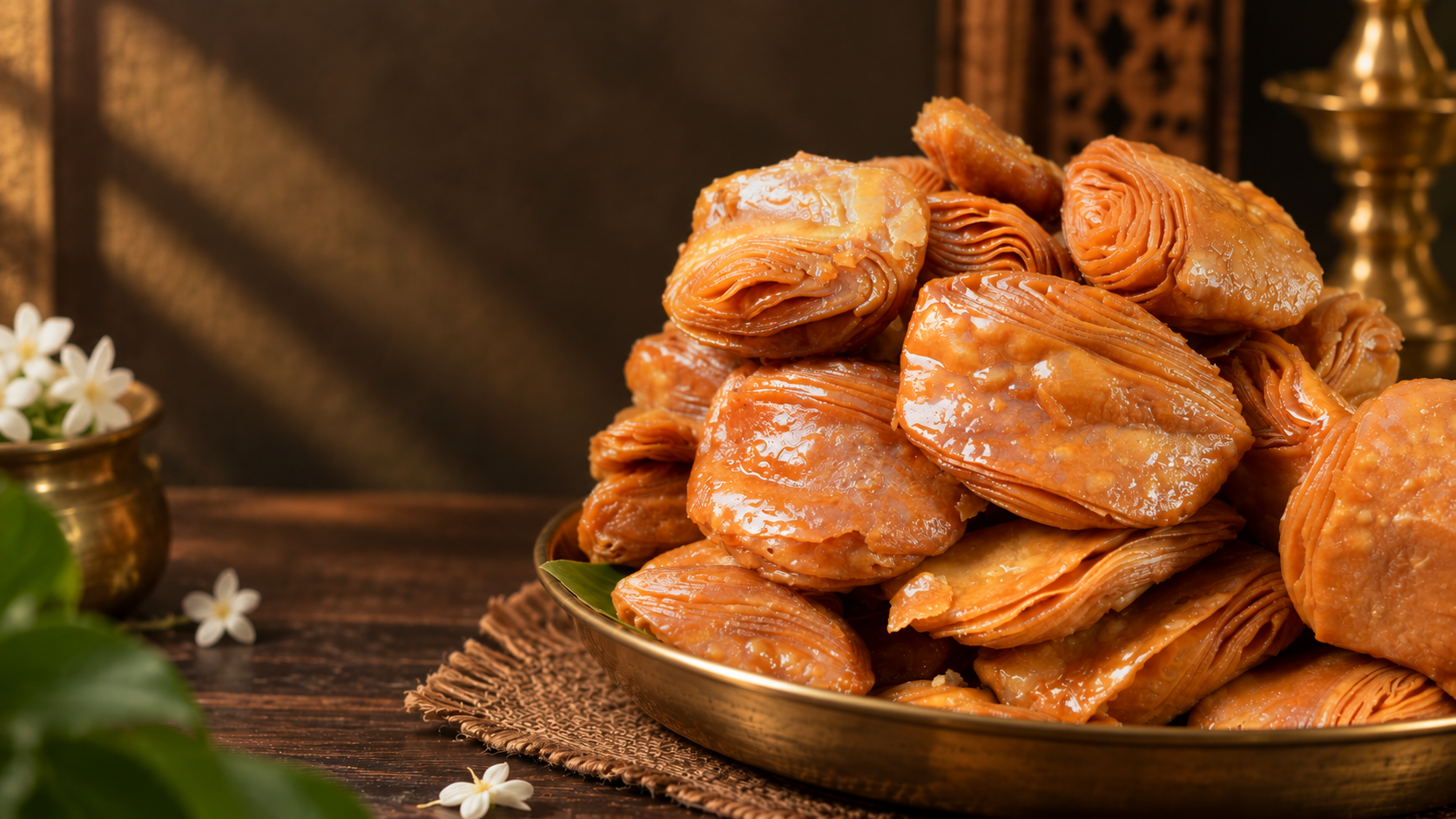
The geometry of taste
Every crisp fold holds a chapter of Odisha’s living memory.
The Aavare Journal · Heritage Series
The SacredLayers of Time
The true history, cultural transmutation and divine temple legacy of Puri Khaja.
In Puri, spirituality is not only heard through bells and chants. It is tasted—one golden, intricate layer at a time.
ENTER THE STORYChapter I · Origins
From ancient courts to Kalinga.
Before Khaja became inseparable from Odisha, layered wheat pastry moved through the kitchens, courts and sacred traditions of ancient India.
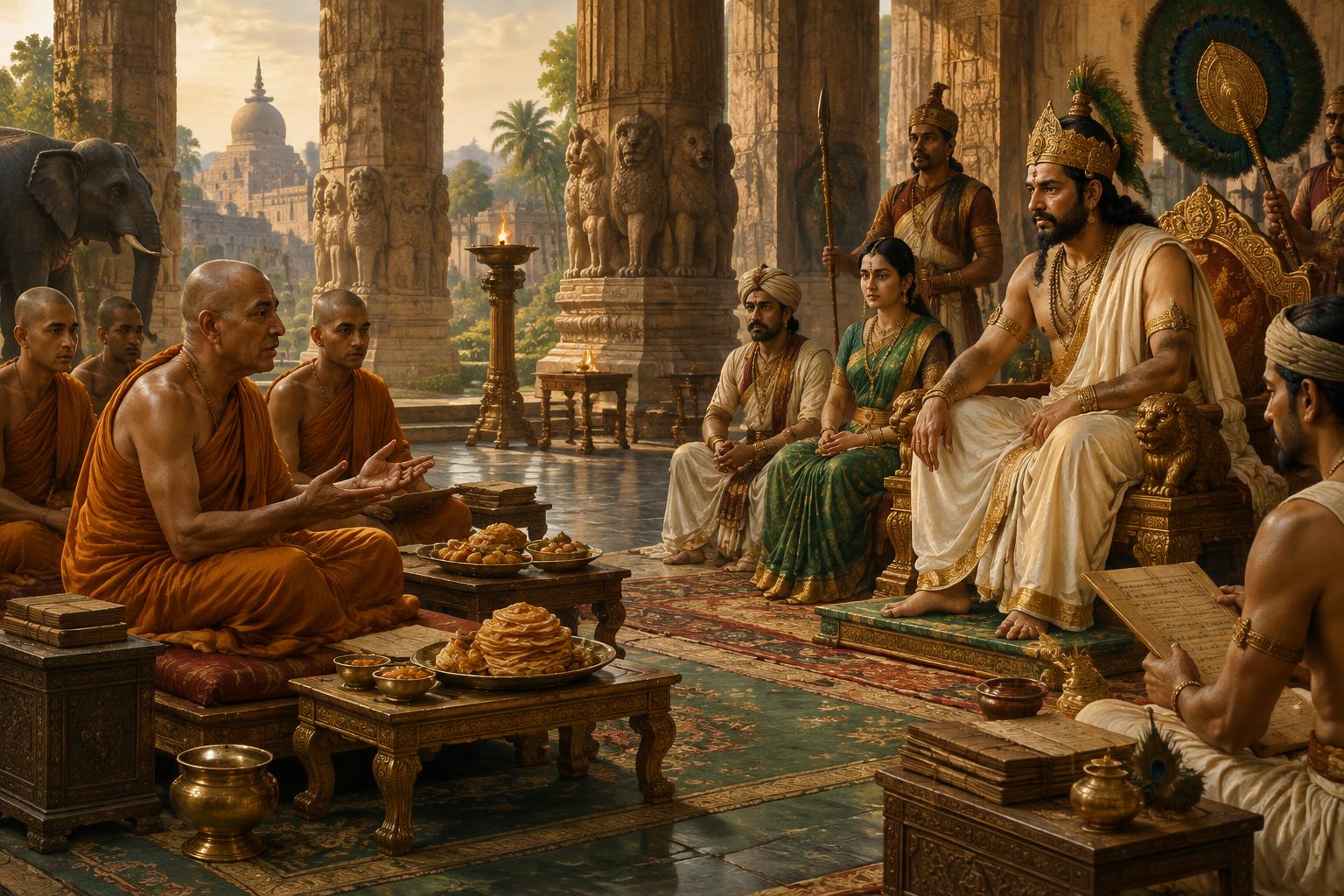
ARTIST’S INTERPRETATION · ANCIENT INDIA
The Mauryan genesis
One historical theory traces the pastry’s technical ancestry to Silao, between ancient Mithila and Nalanda, more than two millennia ago. There, flour, ghee and patient folding became an elite preparation.
Text and folklore
Food traditions connect early wheat-and-ghee preparations with ancient ceremonial kitchens. A beloved oral tale says the name arose when Gautama Buddha invited others to taste it: “Kha, ja”—come, eat.
Origins are preserved through overlapping regional histories and oral traditions; some accounts remain debated by food historians.
Chapter II · Transmutation
How Khaja became Odia.
The recipe travelled. Odisha transformed it.
Odia artisans rolled dough into exceptionally thin ribbons, layered each surface with ghee and flour, and cut the pastry into precise forms. The method created a brittle architecture of leaves, allowing syrup to enter every crevice without destroying the crispness.
That mastery separated Puri Khaja from the soft, delicate Silao tradition and the denser Kakinada Kaja. What arrived as a technique became an unmistakably Odia expression of precision, patience and place.
Fold
Paper-thin
Fry
Slow & golden
Glaze
Thread syrup
Chapter III · The Sanctum
An eternal link to Lord Jagannath.
Khaja found immortality when it entered the gates of the Shree Jagannath Temple.
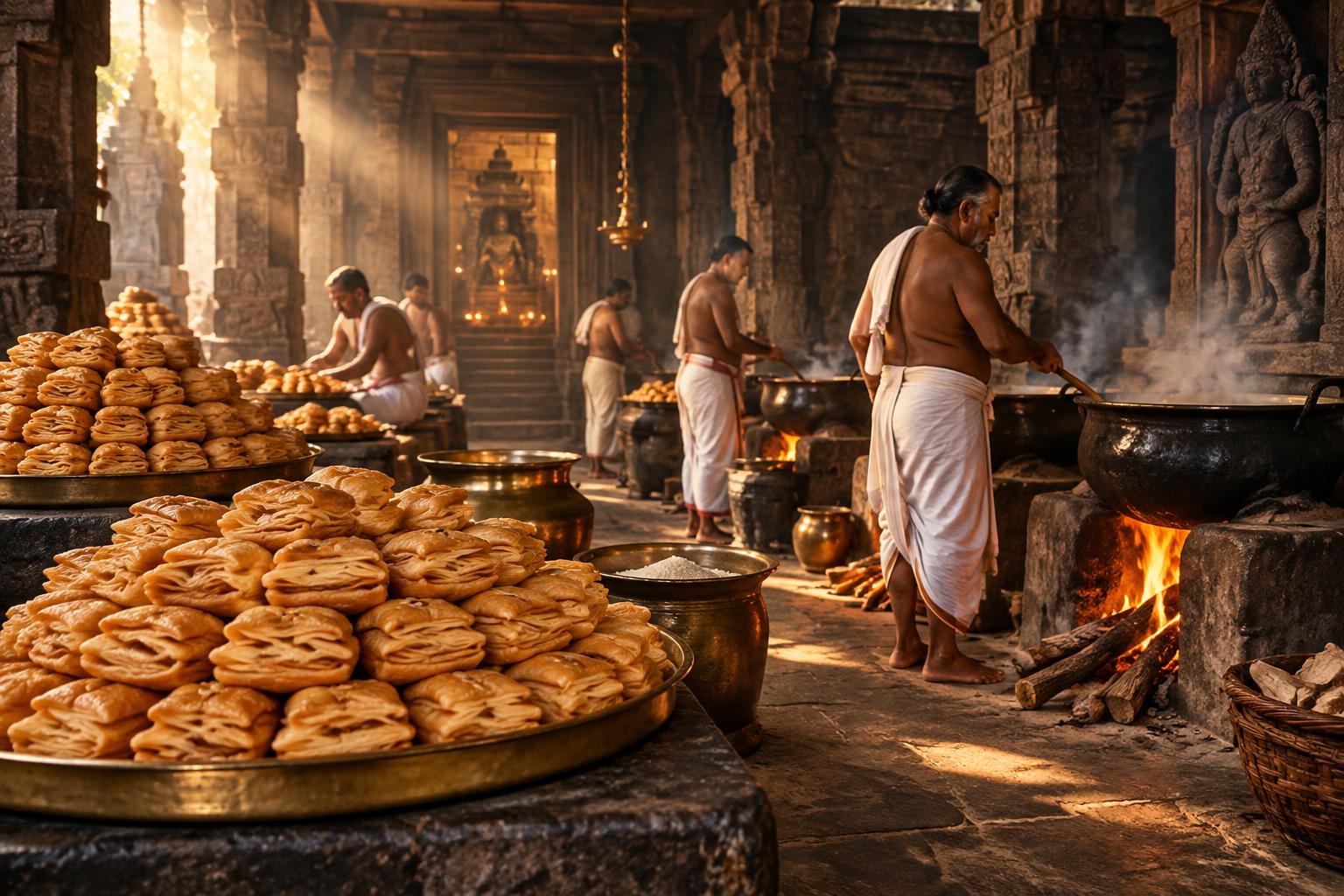
The sacred passage
Within the Chhappan Bhog—the 56 daily offerings—the sweet passes through a ritual sequence that changes its meaning forever.
- 01
Prepared in the Rosaghara
Hereditary Suaras work within the discipline of the temple kitchen.
- 02
Offered to the Trinity
The offering is made to Lord Jagannath, Balabhadra and Subhadra.
- 03
Blessed by Maa Bimala
Only after this offering does the food complete its sacred passage.
- 04
Becomes Mahaprasad
The sweet is transformed from food into a shared divine blessing.
- 05
Shared at Ananda Bazar
Pilgrims carry the blessing from the temple into homes across India.
The visionary dream
Temple lore remembers a devoted sweet maker who longed to offer something singular to the Lord. Moved by devotion, Lord Jagannath appeared in the artisan’s dream and blessed the method—making Khaja an everlasting favourite of the temple.
The pilgrim’s companion
Unlike milk-based sweets, Khaja’s dry, crisp form travelled well. Pilgrims could carry Mahaprasad safely over long journeys, taking the blessing of Puri back to distant homes.
Epilogue · A living legacy
To bite into Puri Khaja is to travel through dynasties, devotion and the disciplined hand of the artisan.
Today, the Bada Danda is still perfumed with frying dough and bubbling syrup. International recognition may have carried Khaja around the world, but its soul remains where it began: in Puri, made to be offered, shared and remembered.
BACK TO THE JOURNAL