 AAVARÉ
Place · 7 min read
The Heritage of Odisha
Odisha's visual language is precise without being cold — a grammar of arches, repetition and restraint that quietly shapes everything we make.
The arch and the lotus
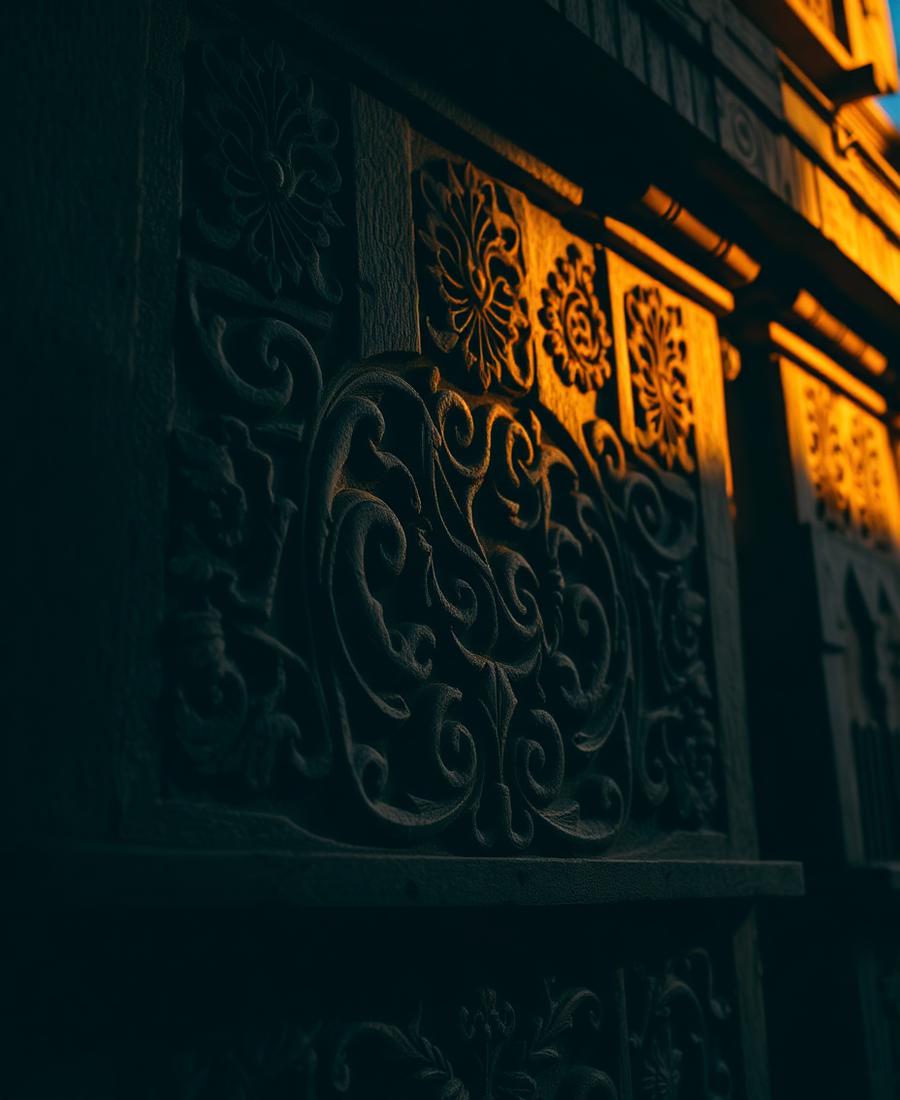
Kalinga temple architecture is built on repetition: a motif stated once, then restated at every scale until the whole building rhymes with its smallest detail. The arch that frames a deity is the same arch carved into a door lintel and pressed into a bronze lamp.
Our emblem borrows that logic. The arch is the doorway, the lotus is the offering, and the pattern that runs through the site is the same motif at a whisper.
Ornament here is never decoration. It is structure made visible.
Palm leaf and the value of a line
Odia palm-leaf manuscripts were scored with a stylus and blackened with soot — a medium with no eraser. Every line had to be committed. That constraint produced an illustration style of extraordinary economy, and it is a good instruction for a brand: state it once, state it well.
Materials with memory
Brass, terracotta, ikat thread, stone. Odia craft favours materials that age visibly rather than materials that stay new. We chose antique gold, deep emerald and warm ivory for the same reason: they look better with use than they do on the shelf.
Continue reading